

Cars & Driving

Before Every Long Journey: A Pre-Trip Vehicle Safety Walkthrough

Share
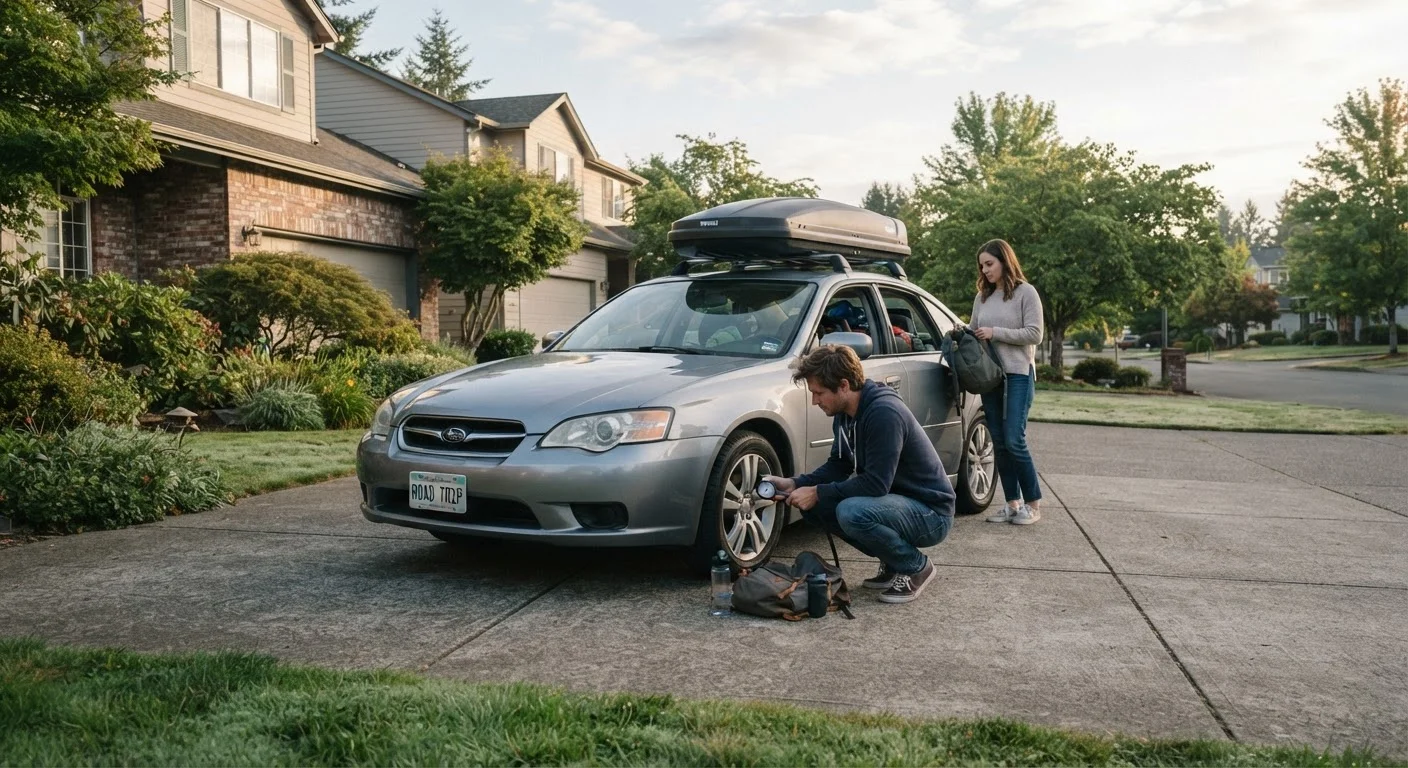
Driver performing a pre-trip safety walkround check on a family sedan in a driveway

Key Takeaways

Tyre pressure, tread depth, and visible damage should be checked before every long trip.
Fluid levels — oil, coolant, brake fluid, and washer fluid — are quick to check and critical to safety.
All exterior lights must be working before you leave, including hazards and brake lights.
An emergency kit in the boot adds meaningful protection if something goes wrong on the road.
Many breakdowns and roadside incidents are preventable with a 20-minute pre-departure check.
15–30 min

Summary

22 items · 15–30 minutes

Why a Pre-Trip Check Matters More Than You Think

Most vehicle problems that leave drivers stranded don't appear out of nowhere. A slow tyre leak, low coolant, a burnt-out brake light — these are the kinds of issues a quick walkround catches before they become a 60-mph problem. The National Highway Traffic Safety Administration (NHTSA) consistently links tyre failures and lighting defects to preventable crashes, and fluid-related breakdowns are among the most common calls to roadside assistance services.

This checklist is designed for everyday drivers, not mechanics. You don't need special tools or deep technical knowledge to work through it — just 15 to 30 minutes before you leave. Whether you're heading out for a weekend getaway or a multi-state drive, the habit is worth building. If you're newer to the road, the broader principles in our safe driving introduction are a good companion read.

Tyres

Check tyre pressure on all four tyres (plus the spare) using a gauge, and inflate to the PSI listed on the driver's door jamb sticker — not the number moulded into the tyre sidewall. Must
Inspect each tyre's tread depth using a penny or tread-depth gauge; replace any tyre at or below 2/32 of an inch. Must
Look over each tyre for cuts, bulges, embedded objects, or uneven wear patterns that could indicate a suspension or alignment issue. Must
Confirm the spare tyre is present, properly inflated, and accessible — and that you have the tools to change a flat. Should

Fluids

Check the engine oil level using the dipstick when the engine is cold; top up if low, and note any discoloration that may indicate a larger issue. Must
Inspect the coolant reservoir level against the marked min/max lines; never open the radiator cap on a warm engine. Must
Verify brake fluid is within the reservoir's marked range; a notably low level can signal brake system wear and warrants professional inspection. Must
Top up windshield washer fluid to full so you're prepared for road grime, insects, and rain throughout the journey. Should
Glance at the power steering fluid level if your vehicle has a hydraulic system (most newer vehicles use electric power steering and won't have a reservoir). Nice to have

Lights and Visibility

Walk around the vehicle with a helper (or use a reflective surface) to confirm both headlights, taillights, and brake lights are functioning. Must
Test both turn signals front and rear, as well as the hazard lights. Must
Adjust all mirrors — driver's side, passenger's side, and rearview — before moving the vehicle. Must
Clean the windshield inside and out; interior haze from outgassing materials significantly worsens night and glare driving. Should
Check that wiper blades clear the windshield cleanly without streaking or skipping. Should

Safety Equipment and Emergency Kit

Confirm seatbelts in all occupied seating positions latch, retract, and release smoothly. Must
Check that your vehicle registration, proof of insurance, and driver's licence are with you and current. Must
Pack or verify a basic emergency kit: jumper cables or a jump-starter pack, a reflective triangle or road flares, a torch, and a basic first-aid kit. Should
Make sure a phone charger (car adapter or power bank) is packed so you're not stranded without navigation or the ability to call for help. Should
Check that any child safety seats are properly secured and adjusted for the passengers using them. Must

Under the Hood and Underbody

After starting the engine, listen briefly for unusual sounds — knocking, squealing, or rough idling — and look for any warning lights on the dashboard. Must
Test the brakes at low speed in your driveway or a quiet area; any grinding, pulling, or sponginess warrants professional inspection before a long drive. Must
Check underneath the vehicle for any fresh fluid spots on the ground where the car was parked overnight. Should

Tools and Supplies to Have on Hand

You don't need a full garage setup to run through this checklist. A few inexpensive, easy-to-store items are all it takes to check your vehicle properly before departure. Keep them in your boot or glove compartment so they're always accessible.

Required

Tyre pressure gauge

Accurately reads tyre inflation to help you match the manufacturer's recommended PSI.

Required

Tread depth gauge or penny

Measures remaining tread depth to assess whether tyres are safe for highway driving.

Required

Torch / flashlight

Helps inspect dark areas under the hood, around tyres, and beneath the vehicle.

Optional

Fluid top-up supplies

Engine oil, coolant, and windshield washer fluid matched to your vehicle's specifications for quick top-ups.

Optional

Microfibre cloth or window cleaner

Cleans the inside of the windshield to reduce glare and improve visibility.

For a deeper look at reading tyre condition accurately, see our guide on tyre pressure, tread, and rotation.

Before You Head Out: A Few Final Notes

This walkround covers the fundamentals. For vehicles with advanced driver-assistance systems — adaptive cruise control, lane-keep assist, blind-spot monitoring — check your owner's manual for any calibration or sensor checks those systems require. If anything on this checklist reveals a problem you're unsure how to assess, have a qualified mechanic take a look before departing rather than hoping it holds.

Do Not Ignore Dashboard Warning Lights

If any warning light — check engine, brake, oil pressure, tyre pressure (TPMS), or battery — is illuminated when you start the vehicle, do not dismiss it as a quirk and drive on. These systems exist to flag conditions that may worsen under highway stress. Have the issue diagnosed by a qualified mechanic before undertaking a long trip. Ignoring an active warning light can turn a minor repair into a roadside breakdown or, in some cases, a safety hazard.

It's also worth checking your route for known construction zones or weather advisories before you leave. Conditions change, and a few minutes of planning can save significant time and stress. Our seasonal car maintenance guide covers additional vehicle prep tied to specific weather conditions throughout the year.

For a broader look at the habits that keep all drivers safer over time — not just before long trips — see why experienced drivers often take the most risks.

Cars & Driving Editorial Team is the collective byline for our editorial team and contributor network. Articles published under this byline or an editorial pen name are researched, written, and reviewed according to our editorial standards for clarity, consistency, and independence before publication.

View all articles by Cars & Driving Editorial Team →
Disclaimer: The content on this site is for informational purposes only and is not a substitute for professional advice. Always consult a qualified professional for guidance specific to your situation.