

Key Takeaways
Why Tyres Deserve More Attention Than They Usually Get
Tyres are the only part of your car that actually touches the road. They affect how quickly you stop, how well you corner, and how much fuel you burn. Yet most drivers only think about them after a flat or a warning light. A few simple habits — pressure checks, tread inspections, and regular rotation — can meaningfully improve both safety and tyre longevity.
For a broader look at seasonal vehicle readiness, see our seasonal car maintenance guide. And if you want to go deeper on tread and alignment specifically, this overview of tyre health pillars covers it in detail.
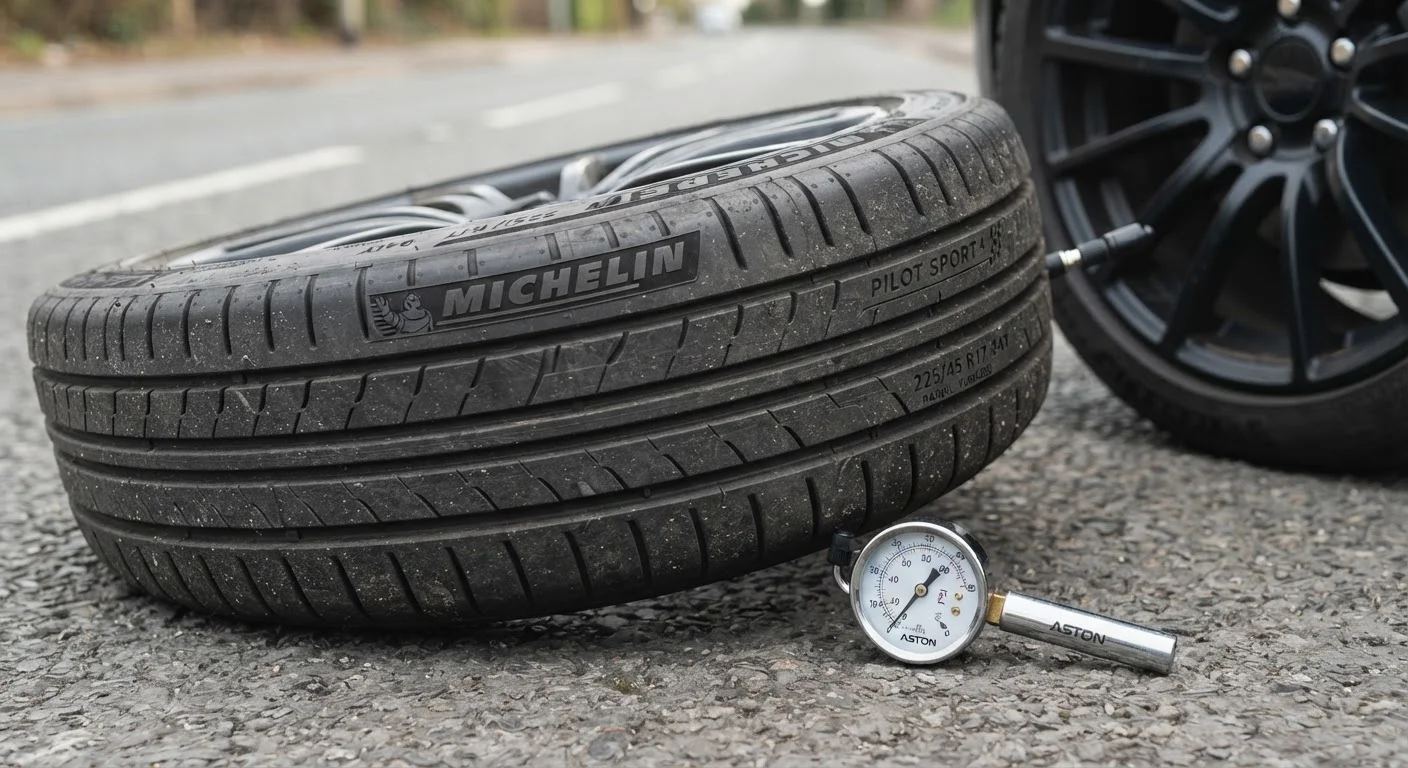
Check tyre pressure when the tyres are cold, using your vehicle's recommended PSI — not the number on the tyre sidewall.
The PSI printed on the tyre is the maximum it can hold, not the target for your car. Using the manufacturer's recommended figure (found on the door jamb sticker or owner's manual) ensures optimal handling, fuel efficiency, and tyre wear. Cold pressure readings are more accurate because driving heats the air inside and temporarily raises pressure.
Inspect tread depth monthly using a quarter or a dedicated tread-depth gauge.
Worn tread reduces grip, especially on wet roads, and significantly increases stopping distances. The US legal minimum is 2/32 of an inch, but many safety organizations recommend replacing tyres at 4/32 for better wet-weather performance. Catching wear early also helps you budget for replacements rather than facing an emergency purchase.
Rotate your tyres every 5,000 to 7,500 miles, or as specified in your owner's manual.
Front tyres typically wear faster than rear tyres on front-wheel-drive vehicles because they handle both steering and propulsion. Rotating them on a regular schedule evens out wear across all four tyres, maximizing the life of the full set and reducing the chance of uneven handling.
Do a quick visual inspection of all four tyres every time you approach your car.
Slow leaks, embedded nails, sidewall bulges, and cracking can develop between formal checkups. A brief walk-around takes under two minutes and can catch a dangerously low tyre before you pull onto the highway. Sidewall damage and bulges in particular warrant immediate professional attention — they can lead to sudden blowouts.
Check and adjust spare tyre pressure every few months so it's usable when you actually need it.
Spare tyres — especially compact 'donut' spares stored under the vehicle or in the trunk — lose air pressure over time just like regular tyres. A flat spare is useless in an emergency, and many drivers discover this problem only at the worst possible moment.
Quick Wins: Actions You Can Take Today
You don't need special tools or a mechanic's knowledge to keep your tyres in reasonable shape. These actions take minutes and make a real difference.
Key Numbers to Know
Understanding a few reference figures puts tyre care in concrete terms. Pressure, tread depth, and rotation intervals are all measurable — and knowing the thresholds helps you make confident decisions rather than guessing.
2/32"
US legal minimum tread depth
Most US states require replacement at this depth; safety organizations often recommend acting at 4/32" for better wet-road grip.
~25%
Fuel efficiency loss from underinflation
The US Department of Energy estimates that tyres underinflated by just 1 PSI can reduce fuel economy by around 0.2% per PSI across all four tyres.
5,000–7,500 mi
Typical tyre rotation interval
Most vehicle manufacturers recommend rotation within this range; always defer to your owner's manual for your specific model.
When in doubt about any of these figures for your specific vehicle, check the sticker inside your driver's door jamb or your owner's manual — both list manufacturer-recommended tyre pressure. For guidance on what worn tyres actually look like on the road, our article on tyre condition and road safety is a useful reference. You might also pair tyre checks with the pre-trip vehicle safety walkthrough before any long drive.