

Cars & Driving

What to Check Before Every Long Road Trip

Share
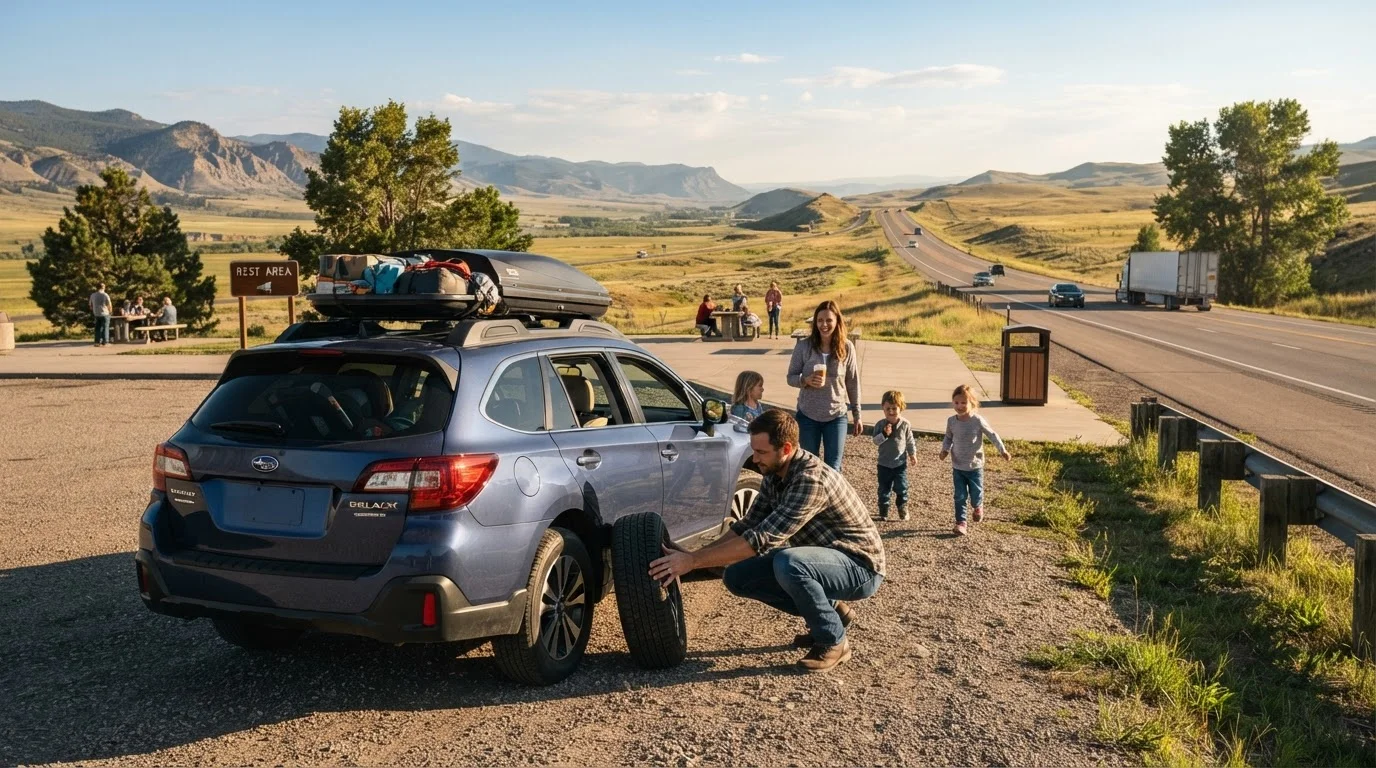
Driver inspecting a car tire at a rest stop before a long road trip on a sunny day

Key Takeaways

Checking tires, fluids, and lights before departure significantly reduces breakdown risk on long drives.
A fully stocked emergency kit is a basic safety requirement, not an optional extra.
Many pre-trip checks take only a few minutes and require no special tools.
Addressing small issues at home is far safer and cheaper than dealing with them on the road.
Seasonal conditions may require additional checks beyond this standard list.
20–45 min

Summary

22 items · 20–45 minutes

Why a Pre-Trip Check Matters

A long road trip puts more sustained stress on your vehicle than most daily driving ever does. Hours of highway speeds, temperature swings, and heavy loads can turn a minor issue into a roadside emergency. The good news is that most of the common causes of breakdowns — low tire pressure, overheating from insufficient coolant, a dead battery — are easy to catch before you leave the driveway.

This checklist is designed to be worked through the day before or the morning of your departure. You don't need to be a mechanic; you need about 30 minutes and a willingness to look closely. For a deeper dive into everyday safe driving habits, see our introduction to safe driving fundamentals.

If your trip falls near a season change, it's also worth reviewing our seasonal car maintenance checklist for weather-specific considerations like winter tires or summer coolant levels.

Tires

Check tire pressure on all four tires (and your spare) using a digital gauge — consult your owner's manual or the sticker inside the driver's door for the correct PSI. Must
Inspect each tire's tread depth visually; if the tread wear indicators are flush with the surface, the tire needs replacing before the trip. Must
Look for sidewall cracks, bulges, or embedded objects such as nails or screws that could cause a blowout. Must
Confirm your spare tire is inflated to the manufacturer's recommended pressure and that your jack and lug wrench are accessible. Should

Fluids

Check engine oil level with the dipstick when the engine is cold; top up or schedule an oil change if you're within 500 miles of your next interval. Must
Verify coolant (antifreeze) level in the reservoir — never open the radiator cap on a hot engine. Must
Check brake fluid level against the MIN/MAX markings on the reservoir; a noticeably low level may indicate worn brake pads or a leak worth investigating. Must
Top up windshield washer fluid — highway driving kicks up significant grime, and running dry can impair visibility quickly. Should
Check power steering fluid if your vehicle has a hydraulic system (many newer cars use electric steering and have no reservoir). Nice to have

Lights and Electrical

Test all exterior lights: headlights (low and high beam), taillights, brake lights, turn signals, and reverse lights. Must
Check that your battery terminals are clean and free of corrosion; if your battery is more than four years old, consider having it load-tested at an auto shop. Should
Verify that your dashboard has no warning lights illuminated; if any are on, look up what they mean in your owner's manual before departing. Must

Visibility and Controls

Inspect windshield wiper blades for streaking or skipping and replace them if they leave water smears. Should
Clean all windows and mirrors inside and out — low sun angles on highway driving make interior haze and exterior dirt much more dangerous. Should
Confirm your horn, hazard lights, and parking brake all function correctly. Must

Emergency Kit

Pack a basic emergency kit including jumper cables (or a jump-start pack), a flashlight with fresh batteries, reflective triangles or road flares, and a first-aid kit. Must
Include a phone charger or portable power bank so you can always call for help if needed. Must
Add water and a light snack supply adequate for your expected travel time, in case of an unexpected delay. Should
Keep a basic tool kit — screwdrivers, pliers, zip ties, and duct tape — in the trunk for minor roadside fixes. Nice to have

Documents and Logistics

Confirm your driver's license, vehicle registration, and proof of insurance are in the car and current. Must
Download offline maps for your route in case cell coverage is unreliable in rural areas. Should

Tools You'll Want on Hand

You don't need a fully equipped garage to run through this checklist, but a few basic items make the process quicker and more reliable.

Required

Digital tire pressure gauge

Gives accurate PSI readings for all tires, including the spare.

Required

Flashlight or work light

Helps you inspect under the hood, check tire sidewalls, and test lights even in low light.

Required

Vehicle owner's manual

Contains correct fluid specs, tire pressure values, and warning light explanations specific to your car.

Optional

Portable jump-start pack

Lets you restart a dead battery without needing another vehicle nearby.

Optional

Tread depth gauge

Measures remaining tire tread precisely; a coin test is a rough alternative but a gauge is more reliable.

Once you've verified everything on this list, you're not just ready to drive — you're driving with confidence. For a complementary walkthrough focused specifically on safety systems and mirrors, our pre-trip vehicle safety walkthrough is a useful companion read. And for ongoing upkeep between trips, browse our car maintenance hub for practical guidance on keeping your vehicle road-ready year-round.

Don't Skip the Spare Tire Check

Many drivers assume their spare is ready to go and never inspect it — then find it flat or damaged when they actually need it. Include the spare every time you check tire pressure. A compact or 'donut' spare typically has a lower maximum speed and mileage limit than a full-size tire, so review those restrictions in your owner's manual before relying on one for an extended drive.

Cars & Driving Editorial Team is the collective byline for our editorial team and contributor network. Articles published under this byline or an editorial pen name are researched, written, and reviewed according to our editorial standards for clarity, consistency, and independence before publication.

View all articles by Cars & Driving Editorial Team →
Disclaimer: The content on this site is for informational purposes only and is not a substitute for professional advice. Always consult a qualified professional for guidance specific to your situation.