

Key Takeaways
The Maintenance Items Nobody Talks About
Oil changes and tire rotations get most of the attention — and rightly so. But a handful of equally important maintenance jobs sit just outside most drivers' awareness, quietly shortening the life of a perfectly good car. These aren't obscure or complicated tasks; they simply don't come up as often, which means they get pushed back indefinitely.
The pattern is familiar: a warning light doesn't appear, the car still drives fine, and skipping one more month seems harmless. By the time a symptom shows up, the damage is already done. The costs of deferred maintenance tend to compound — small neglected items create stress on connected components, and a cheap fix becomes an expensive one.
The list below covers maintenance tasks that deserve a spot on your schedule but rarely get one.
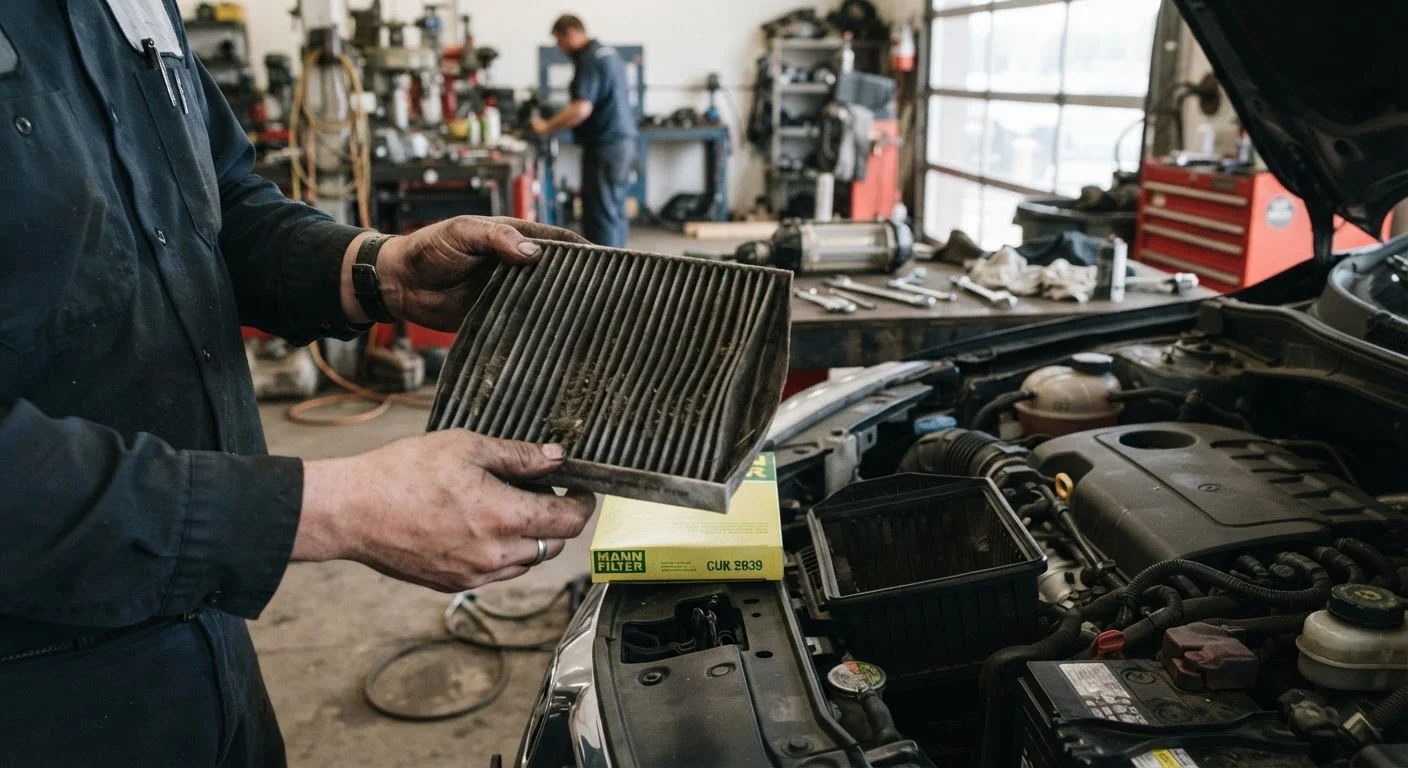
Cabin Air Filter
The cabin air filter cleans the air flowing through your heating and air conditioning system before it reaches the passenger compartment. Most manufacturers recommend replacing it every 15,000 to 25,000 miles, though dusty or heavily trafficked driving conditions can clog it faster.
A severely blocked filter restricts airflow, forcing the HVAC blower motor to work harder. Over time, that added strain can shorten the motor's life — turning a cheap filter replacement into a considerably more expensive repair. You may also notice reduced airflow from vents or musty odors before the motor shows any sign of stress.
A clogged cabin filter forces the blower motor to overwork, risking a far costlier replacement.
Spark Plugs
Spark plugs ignite the air-fuel mixture in your engine. When they wear out, combustion becomes inconsistent — the engine misfires, fuel economy drops, and the catalytic converter can be damaged by unburned fuel passing through the exhaust system.
Conventional spark plugs typically need attention around every 30,000 miles, while iridium and platinum plugs used in many modern vehicles can last 60,000 to 100,000 miles. The exact interval is in your owner's manual. Because degradation is gradual, drivers often adapt to reduced performance without realizing the engine isn't running as it should. By the time a misfire becomes obvious, catalytic converter damage may already have occurred — a repair that runs into the hundreds or even thousands of dollars.
Worn spark plugs can silently damage a catalytic converter long before a misfire becomes obvious.
Coolant Flush
Engine coolant (sometimes called antifreeze) doesn't just prevent freezing — it also contains corrosion inhibitors that protect the radiator, water pump, and other cooling system components. Those inhibitors break down over time, leaving metal parts vulnerable to rust and scale buildup.
Degraded coolant can cause overheating, corrode the radiator from the inside, and accelerate water pump wear. Most manufacturers recommend a coolant flush somewhere between 30,000 and 100,000 miles depending on the fluid type used. Because coolant doesn't dramatically change in appearance as it ages, it's easy to assume it's still doing its job when it isn't.
Old coolant loses its corrosion inhibitors, silently attacking the radiator and water pump from within.
Transmission Fluid
Transmission fluid lubricates the internal components of the transmission and, in automatic transmissions, also serves as a hydraulic fluid. It degrades and becomes contaminated with metal particles over time, reducing its ability to protect moving parts.
Many drivers assume transmission fluid is a sealed, lifetime fluid — a claim that applies to some vehicles but not all, and even in those cases, high-stress use (frequent towing, stop-and-go driving) can accelerate breakdown. A transmission service done too late often can't reverse existing wear. Check your owner's manual for the interval and pay attention to any shuddering, delayed shifting, or unusual sounds, which can indicate fluid in poor condition.
The 'lifetime fluid' assumption catches many owners off guard when transmission problems appear.
Brake Fluid
Brake fluid absorbs moisture from the air over time — a property that gradually lowers its boiling point. Under hard braking, degraded fluid can boil inside the brake lines, creating vapor bubbles that compress instead of transmitting pressure. The result is a soft, spongy pedal at exactly the moment you need reliable braking.
Most manufacturers recommend testing or replacing brake fluid every two years or so, though intervals vary. It's a straightforward check a mechanic can perform during any inspection. Given that brake performance is directly tied to safety, this is one task worth keeping current. See the seasonal maintenance checklist for other safety-critical items to review regularly.
Moisture-laden brake fluid can boil under hard braking, causing the pedal to go soft.
PCV Valve
The PCV (positive crankcase ventilation) valve is a small, inexpensive part that routes combustion gases from the engine crankcase back into the intake to be burned rather than vented to atmosphere. When it sticks or clogs, pressure builds inside the engine, which can push oil past gaskets and seals.
The consequences — oil leaks, sludge buildup, and accelerated engine wear — are far more costly than the part itself. Despite this, the PCV valve rarely appears on standard service reminders. Many manufacturers suggest inspection around every 30,000 miles, but the interval varies by vehicle. It's a small item worth asking about during any routine service visit. For a broader look at what a standard service covers, see what actually happens during a car service.
A stuck PCV valve builds internal engine pressure that forces oil past seals and gaskets.
Keeping the Full Picture in View
None of these jobs are particularly expensive or time-consuming when done on schedule. The trouble is that skipping them rarely produces an immediate consequence, so the habit of neglect is easy to form. Checking your owner's manual for recommended intervals — rather than relying on memory or general rules of thumb — is one of the most reliable habits you can build as a car owner.
Start with Your Owner's Manual
Service intervals for these items vary significantly by vehicle make, model, and driving conditions. Your owner's manual lists the manufacturer's recommended intervals and is the most accurate reference point for your specific car. If you've misplaced yours, most automakers make digital versions available on their websites.
If you're unsure which of these items your car is overdue for, a mechanic can quickly assess what's been missed during a standard inspection. And if you want to build broader maintenance habits between appointments, the routines covered here are a practical starting point.
This article is for general informational purposes only. Always consult your vehicle's owner's manual and a qualified mechanic for maintenance guidance specific to your car.