

Key Takeaways
Oil Viscosity Grade
Viscosity grade is a standardized rating that describes how thick or thin an engine oil is and how it flows at different temperatures. The numbers on the label — like 5W-30 or 10W-40 — follow a system set by the Society of Automotive Engineers (SAE). These ratings help you match the right oil to your engine's design and the climate you drive in.
The 'W' stands for Winter, not weight. The number before it reflects low-temperature flow behavior, while the number after describes viscosity at normal operating temperature (roughly 212°F / 100°C).
Breaking Down the Label: What Each Number Tells You
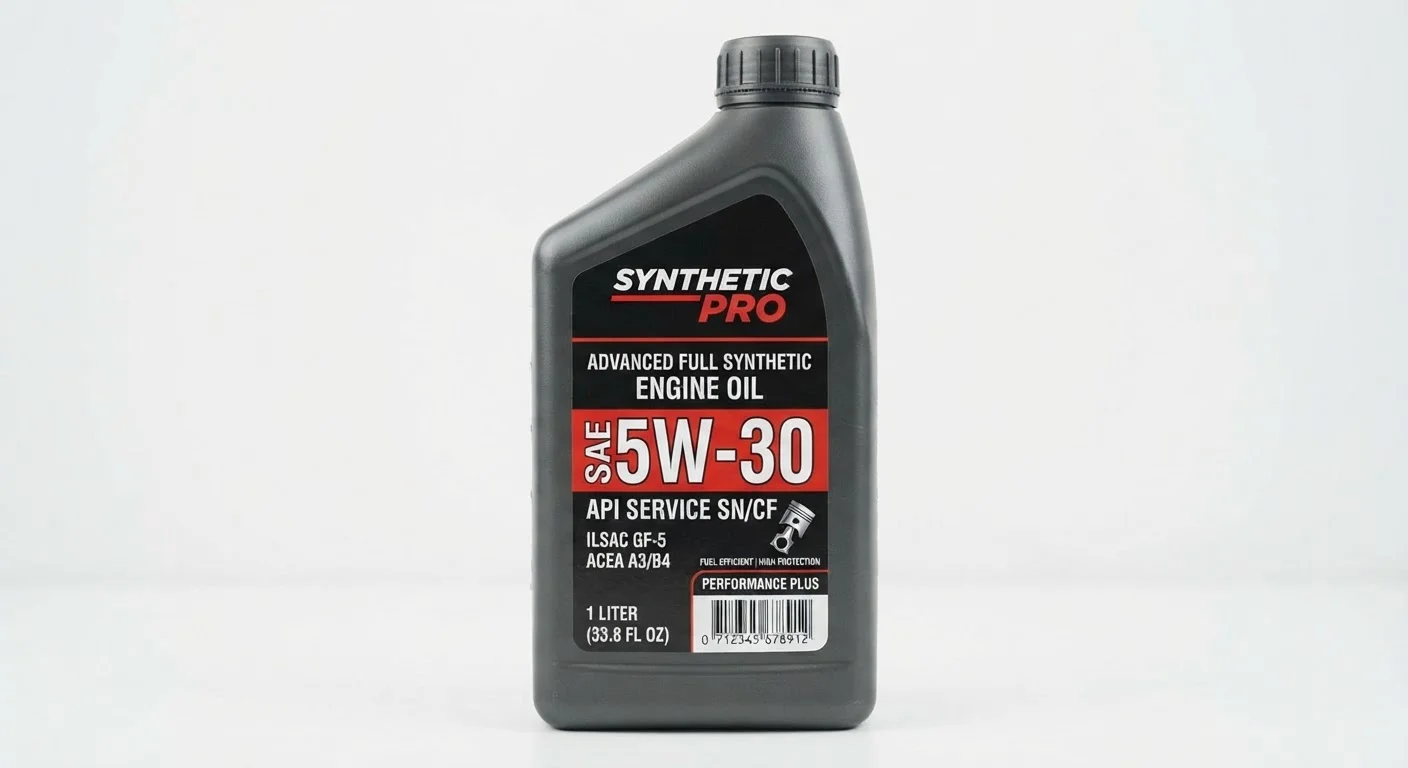
Pick up any bottle of motor oil and you'll see a code like 5W-30, 10W-40, or 0W-20. These aren't arbitrary — they follow a standardized system developed by the Society of Automotive Engineers (SAE) to describe how oil behaves at different temperatures.
Here's the simple breakdown:
- The number before the W — This is the cold-temperature rating. A lower number means the oil flows more freely when your engine is cold, which matters most during startup in winter. Oil that flows quickly at startup reaches engine parts faster, reducing wear in those first critical seconds.
- The W itself — It stands for Winter, not weight. A common misconception worth clearing up.
- The number after the W — This is the high-temperature rating, measuring how thick the oil remains once your engine reaches normal operating temperature (around 212°F). A higher number means a thicker oil film at heat.
So a 5W-30 oil flows like a thin grade-5 oil in the cold but maintains the protective thickness of a grade-30 oil when hot. That's why modern oils are called multi-grade — they're engineered to work across a range of conditions rather than just one temperature extreme.
~25%
Engine wear that occurs at cold startup
Industry estimates suggest a significant portion of total engine wear happens in the first moments after a cold start, before oil fully circulates — a key reason cold-temperature viscosity ratings matter.
0W to 25W
Range of SAE cold-temperature viscosity grades
The SAE J300 standard defines cold-temperature grades from 0W through 25W, with lower numbers indicating better cold-weather flow characteristics.
212°F
Temperature used for high-temp viscosity testing
SAE uses approximately 100°C (212°F) as the standard test temperature for the second number in a multi-grade oil rating, representing typical engine operating conditions.
Why the Right Grade Matters for Your Engine
Engine tolerances — the tiny gaps between moving metal parts — are designed with a specific oil viscosity in mind. Too thin, and the oil film can't fully separate those surfaces under load. Too thick, and the oil struggles to reach tight spaces quickly, especially during a cold start.
Your owner's manual specifies the recommended grade because the engineers who designed your engine tested it with that viscosity. Using a significantly different grade isn't guaranteed to cause immediate damage, but over time it can affect wear rates, fuel economy, and how hard your engine works to circulate the oil.
Climate also plays a role. In consistently cold regions, an oil with a lower W number (like 0W or 5W) ensures quick flow when temperatures drop. In hot climates or for vehicles doing heavy towing, a higher second number may provide a more robust protective film. Many manufacturers now account for this and specify a range — your manual may list two acceptable grades.
Always Check Your Owner's Manual First
The grade specified in your owner's manual is the result of engineering testing for your specific engine. Don't rely on what was used last time by a quick-lube shop or what a label markets as 'universal.' If your manual lists more than one acceptable grade, the lower first-number option is generally better for cold climates.
If you're unsure what grade your car needs, the owner's manual is the definitive source — not the label on a random bottle at the store. Some vehicles also have this information printed on the oil filler cap under the hood.
Viscosity Grade vs. Oil Type: Two Separate Decisions
It's easy to conflate viscosity grade with oil quality, but they describe different things. A 5W-30 synthetic and a 5W-30 conventional oil have the same flow characteristics, but synthetic oil is more refined and typically offers better performance in extreme temperatures and longer service intervals.
Think of viscosity grade as the size of the tool, and oil type (synthetic vs. conventional) as the quality of the material it's made from. You need the right size regardless of which quality tier you choose. Our companion article on synthetic vs. conventional motor oil covers that side of the decision in plain terms.
One more thing worth knowing: viscosity ratings only describe the oil itself — not the additives blended into it. Modern engine oils include detergents, anti-wear agents, and other additives that affect performance beyond what the grade label communicates. That's one reason quality and source still matter even when the grade number matches.
Skipping oil changes — regardless of which grade you use — creates its own set of problems. The consequences of neglecting oil changes build gradually and aren't always obvious until real damage has occurred.