

Key Takeaways
Why Personal Time Keeps Losing to Work
Most people don't intend to let personal time disappear — it erodes slowly. A dinner gets moved for a late meeting. A weekend workout gets skipped to finish a report. A vacation day gets swallowed by a project crisis. None of these feel catastrophic in the moment, and that's exactly the problem.
Work operates on a system of visible accountability: deadlines, managers, deliverables. Miss one, and there are consequences. Personal time, by contrast, has no external enforcer. Its value is real but invisible, which means it consistently loses when the two compete.
Imbalance rarely announces itself — it accumulates through hundreds of small concessions, each one seeming reasonable on its own. Recognizing this pattern is the first step toward interrupting it.
The Core Mindset Shift: Commitment, Not Preference
The practical solution is deceptively straightforward: stop classifying personal activities as preferences and start treating them as commitments. A commitment has weight. It requires a reason to reschedule, not just an excuse.
This isn't about rigidity — it's about parity. When you block time for a work deadline, you don't let something else casually overwrite it unless the stakes genuinely warrant it. Apply the same standard to your personal time, and you'll find that many of the interruptions that felt inevitable were actually optional.
“You can always make more money, but you can't make more time. The people who protect their personal hours aren't less committed to their work — they're more committed to sustaining it.”
— Cal Newport, Author and professor researching deep work and digital minimalism
Several popular beliefs about balance actually make this harder — including the idea that protecting personal time is selfish or unprofessional. It isn't. Research consistently links adequate recovery time to higher-quality work output and better decision-making.
Best Practices for Making It Stick
Block personal time in your calendar before the week begins
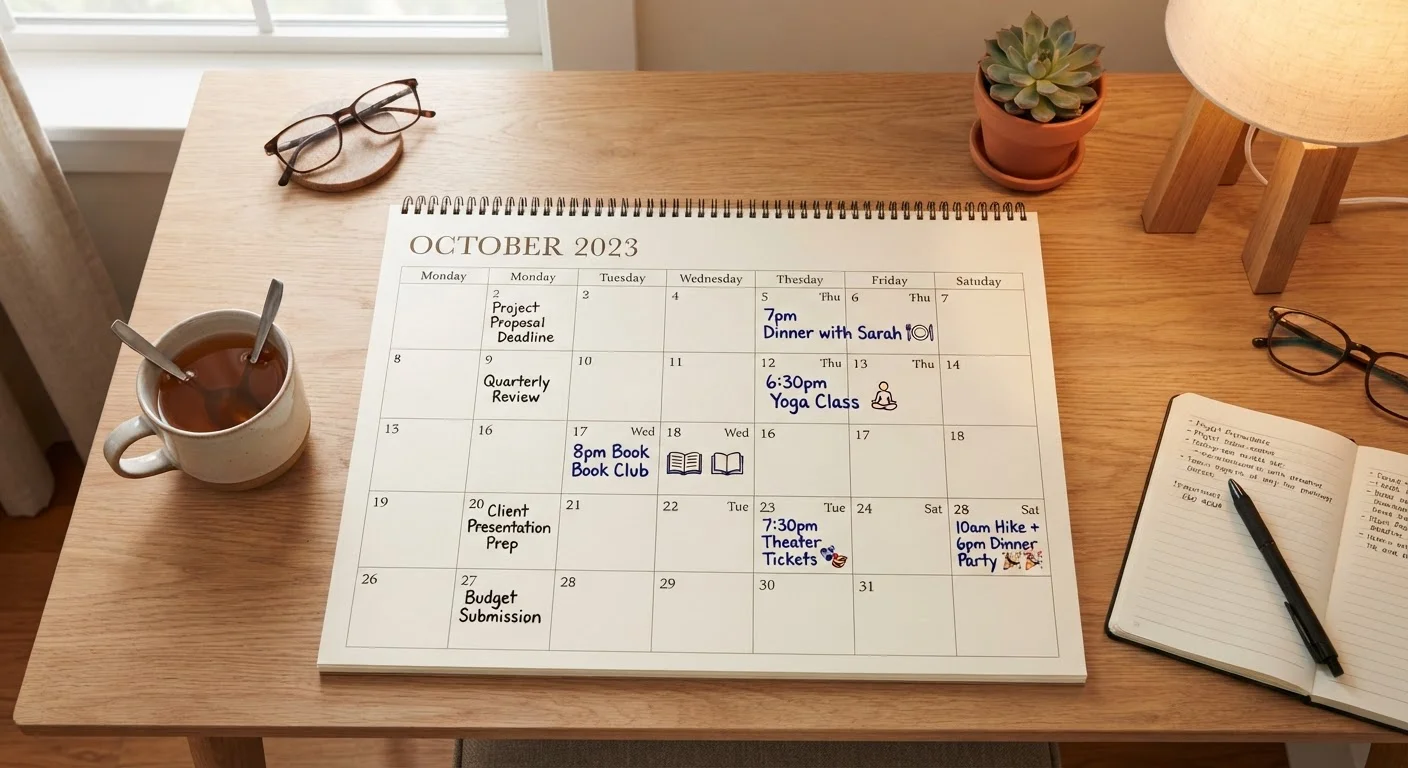
Empty calendar slots are magnets for meetings and task overflow. Scheduling personal time in advance — exercise, family dinners, rest — creates a visible signal that the time is occupied. It also forces a deliberate decision to reschedule rather than a passive cancellation.
Apply the same rescheduling bar to personal commitments as to client meetings
Most professionals would not cancel a client call without a compelling reason. Holding personal commitments to a similar standard exposes how often they get dropped for reasons that wouldn't hold up professionally. This symmetry builds consistency over time.
Set a clear end-of-workday signal and honor it daily
Without a defined stopping point, work expands to fill available time — particularly in remote or hybrid settings. A consistent end signal, whether a shutdown ritual or a physical change of location, helps the brain transition out of work mode more reliably.
Communicate your boundaries proactively, not reactively
Waiting until someone asks you to work evenings or weekends puts you in a defensive position. Stating your availability upfront — during onboarding, in team norms conversations, or in a manager check-in — reduces the pressure before it builds.
Audit weekly where personal time actually went
Most people underestimate how much personal time work consumes until they track it. A brief weekly audit — even a five-minute scan of the previous week — builds accurate self-awareness and highlights patterns that erode balance before they become entrenched.
Treat rest and recovery as a performance input, not a reward
Framing rest as something earned after productivity makes it perpetually deferrable. Reframing it as a necessary input — comparable to preparation or strategy — makes protecting it a professional rationale, not just a personal preference.
If you work remotely, the structural blurring between work and home can make these practices harder to sustain. Working from home erodes personal boundaries in subtle ways — which means the systems you build need to be more deliberate, not less.
For working parents navigating particularly compressed schedules, a structured approach to personal time can ease both the logistics and the guilt.
Quick Actions to Start Protecting Your Time Today
The goal isn't a perfect schedule — it's a more intentional one. Even small changes in how you categorize and defend personal time can shift the overall balance meaningfully. For more on communicating limits at work without damaging relationships, a step-by-step approach makes the conversation easier and more effective.