

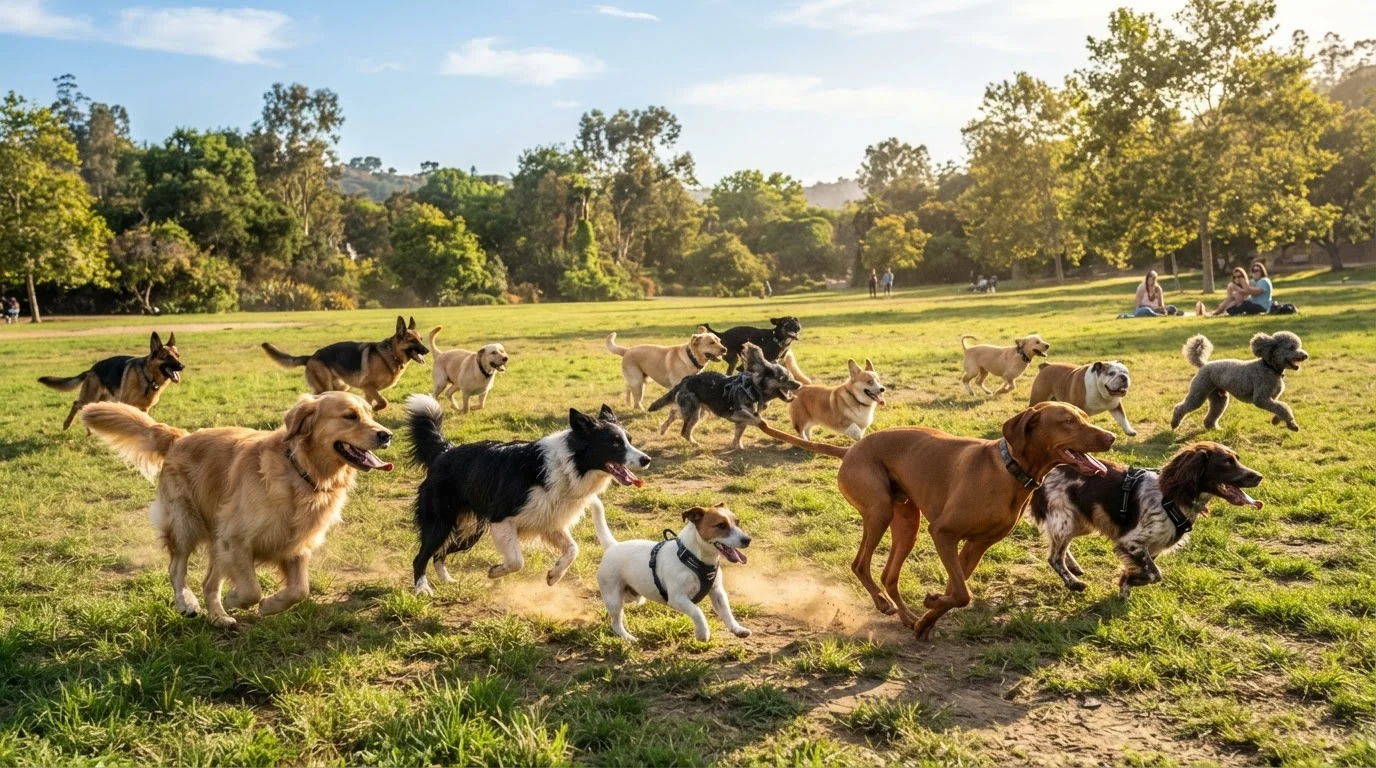
Why Breed Group Shapes Exercise Requirements
Not all dogs were bred for the same purpose, and those origins still drive their daily activity needs. The American Kennel Club recognizes seven major breed groups — Herding, Sporting, Working, Hound, Terrier, Toy, and Non-Sporting — each with distinct exercise profiles shaped by centuries of selective breeding.
High-energy groups include Herding dogs (Border Collies, Australian Shepherds), Sporting dogs (Labrador Retrievers, Vizslas), and Working dogs (Siberian Huskies, Doberman Pinschers). These breeds were built for sustained physical output and typically need 60–120 minutes of vigorous activity daily. Without adequate exercise, they commonly develop destructive behaviors, anxiety, or compulsive habits.
Moderate-energy breeds — many Hounds and some Terriers — do well with 45–60 minutes of daily activity, though Scent Hounds like Beagles can become single-minded and require leashed or fenced exercise at all times.
Lower-energy breeds include most Toy breeds (Cavalier King Charles Spaniels, Shih Tzus) and some Non-Sporting dogs (Bulldogs, Basset Hounds). These dogs may be satisfied with 20–30 minutes of moderate daily movement, though they still benefit from regular short walks for mental stimulation and weight management.
For a fuller picture of how exercise fits into lifelong care, see the complete dog care guide covering every life stage.
Age, Health Status, and Individual Variation
Breed is only one part of the equation. A dog's age and current health status meaningfully alter how much — and what type — of exercise is appropriate.
Puppies
Young dogs have developing growth plates that are vulnerable to injury from excessive or high-impact exercise. A commonly cited veterinary guideline is the five-minute rule: approximately five minutes of formal exercise per month of age, up to twice daily, until growth plates close (typically 12–18 months, longer in large and giant breeds). Free play on soft ground is generally safer than prolonged running or jumping.
Adult Dogs
Most healthy adult dogs reach their peak exercise capacity between one and seven years of age, though this range shifts based on size — giant breeds tend to age more quickly than small ones. This is the phase where breed-typical needs are most predictive.
Senior Dogs
Older dogs benefit from continued moderate activity to support joint health, muscle mass, and cognitive function, but intensity and duration typically need to be reduced. Conditions such as osteoarthritis, heart disease, or obesity may further limit what's appropriate. Always consult your veterinarian before changing an older dog's exercise routine. Your annual vet visit is a good opportunity to reassess activity levels as your dog ages.
Exercise Isn't One-Size-Fits-All Within a Breed
Individual dogs can vary considerably from breed averages due to genetics, early socialization, and health history. A calm Border Collie or a high-energy Basset Hound is not unheard of. Use breed group guidelines as a starting point, then observe your specific dog's behavior, weight, and energy levels to calibrate. Your veterinarian can help you set realistic, safe activity goals.
Brachycephalic Breeds
Flat-faced breeds such as French Bulldogs, Pugs, and Boxers have anatomical airway restrictions that limit their ability to cool themselves during exercise. These dogs are at elevated risk for heat-related illness and respiratory distress, and their exercise should be kept moderate, scheduled during cooler parts of the day, and closely monitored.
Building a Practical Daily Routine
Understanding your dog's needs is the foundation; building a sustainable routine is the goal. Exercise for dogs encompasses more than physical activity — mental stimulation through sniffing, training, and exploration is equally important for behavioral health.
- Vary the type, not just the duration. A mix of leashed walks, off-leash play, and structured training sessions meets physical and cognitive needs more effectively than one long walk alone.
- Watch for fatigue signals. Heavy panting, lagging behind, lying down mid-walk, or reluctance to continue are signs your dog needs a break. Overexertion is a real risk, particularly in hot weather or for dogs new to a routine.
- Consistency matters more than intensity. Two 30-minute sessions daily is generally more beneficial — and safer — than one 90-minute weekend outing for most dogs.
- Indoor and outdoor setups both work. The indoor vs. outdoor dog guide outlines how living arrangements can be adapted to meet exercise requirements regardless of home setup.
If your dog's energy levels change suddenly — becoming lethargic, unusually restless, or reluctant to exercise — that warrants a veterinary check. Behavioral shifts are often the first sign of an underlying health issue. Nutrition also plays a role in your dog's energy levels; see the wet food vs. dry kibble comparison for context on how diet supports an active lifestyle.