

Key Takeaways
Lifestyle Inflation
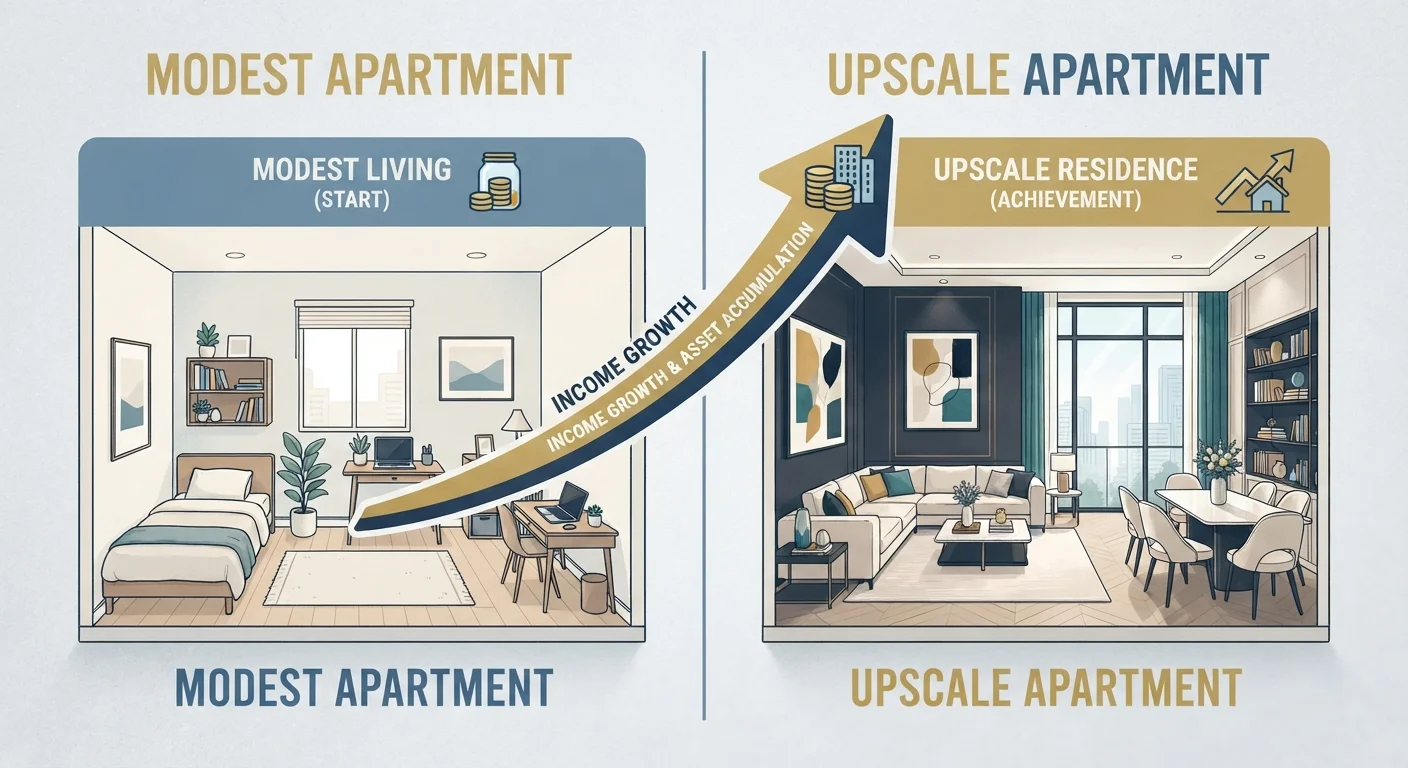
Lifestyle inflation is the tendency for spending to increase alongside income. When you get a raise or a better-paying job, everyday expenses — housing, dining, subscriptions, clothing — often quietly creep upward to match the new paycheck, leaving savings largely unchanged. It's sometimes called 'lifestyle creep.'
Economists link lifestyle inflation to concepts like relative income and hedonic adaptation — the human tendency to adjust quickly to improved circumstances and then treat new comforts as baseline necessities.
How Lifestyle Inflation Works in Practice
Most people expect that earning more money will translate into saving more money. In reality, that relationship is far from automatic. When income rises, spending tends to rise alongside it — often in ways that feel entirely justified in the moment.
A modest pay bump might mean upgrading from a studio to a one-bedroom apartment. A larger promotion might come with a newer car payment, a gym membership, or more frequent restaurant meals. Each individual choice seems reasonable. Collectively, they can absorb an entire raise before it reaches a savings account.
This is lifestyle inflation: not reckless overspending, but a gradual, incremental drift upward in baseline costs. The tricky part is that it rarely feels like a decision. It accumulates quietly, category by category, over months or years.
This article is for general informational and educational purposes only and does not constitute personalized financial advice. Consider consulting a qualified financial professional for guidance specific to your situation.
Why Our Brains Make This So Easy to Miss
Lifestyle inflation persists partly because of how humans adapt to change. Psychologists use the term hedonic adaptation to describe the way people quickly adjust to new circumstances — good or bad — and return to a relatively stable baseline of satisfaction. A nicer apartment feels exciting for a few months, then it simply feels normal. The upgraded standard of living becomes the floor, not a bonus.
This same dynamic makes it hard to notice the inflation happening in real time. You're not comparing your current spending to last year's; you're comparing it to what feels ordinary now. That's why income and spending can both grow steadily while it feels like nothing has changed.
“The problem isn't that people spend too much — it's that they don't make conscious decisions about how much to save before they decide how much to spend.”
— Elizabeth Warren, U.S. Senator and former Harvard Law professor, co-author of 'All Your Worth'
Understanding this tendency isn't about self-criticism — it's about building systems that work around it. Awareness alone rarely changes behavior; structure does.
Practical Ways to Break the Pattern
The most effective countermeasures to lifestyle inflation share a common trait: they reduce the decision burden at the moment income arrives.
Try the '50% Rule' for Raises
When you receive any income increase — raise, bonus, or side income — consider automatically directing at least half of the after-tax gain to savings or debt repayment before adjusting your budget. This way you still benefit from earning more while meaningfully improving your financial position. Even a small consistent split can add up significantly over several years.
- Save the raise first. When your income increases, immediately increase your automated savings contributions before your budget adjusts to the new amount. If you never see the extra in your checking account, it's far less likely to be spent.
- Track your savings rate, not just your balance. A growing balance alongside a shrinking savings rate is a warning sign. Aiming to save a consistent percentage of income — rather than a flat dollar amount — naturally scales with earnings. See how fixed versus percentage-based saving compares for more on choosing an approach.
- Audit spending after major income changes. A raise, bonus, or new job is a natural checkpoint. Review what changed in your spending over the past several months and flag any upgrades that weren't deliberate choices.
- Separate intentional upgrades from default drift. Spending more on something that genuinely matters to you — better health care, a reliable car, fewer financial stressors — is different from passively absorbing a more expensive lifestyle. The question worth asking is: Did I choose this, or did it just happen?
For a broader look at the quiet habits that erode financial progress, this guide on where savers lose ground without realizing it covers similar patterns in detail. And if you're questioning foundational assumptions about saving — like needing a high income before you start — common saving myths worth reconsidering may be worth a read.
~36%
of Americans with income growth who reported no increase in savings
Federal Reserve surveys consistently show that a significant share of households see income gains absorbed by spending rather than saved, regardless of income level.
5–10%
Typical recommended savings rate as a starting benchmark
Financial educators commonly suggest saving at least 10–15% of gross income; many households fall short even after income increases, suggesting lifestyle inflation is widespread.