

Why the Five Factors Matter
Your credit score is a three-digit number — typically between 300 and 850 — that lenders use to gauge how likely you are to repay what you borrow. But it isn't a mystery number pulled from thin air. The two most widely used scoring models, FICO and VantageScore, both weigh a handful of clearly defined factors from your credit report. Knowing those factors — and how heavily each one counts — lets you make smarter decisions instead of guessing. For a broader look at how scores are calculated and what different ranges signal to lenders, see our Credit Scores Explained article.
Breaking Down Each Factor
1. Payment History (approx. 35%)
This is the single largest piece of your score. Lenders want to see that you pay on time, every time. A payment that arrives 30 or more days late can appear on your credit report and drag your score down noticeably. The damage fades over time, but late payments can stay on your report for up to seven years. The fix is straightforward: set up autopay or calendar reminders so you never miss a due date.
2. Credit Utilisation (approx. 30%)
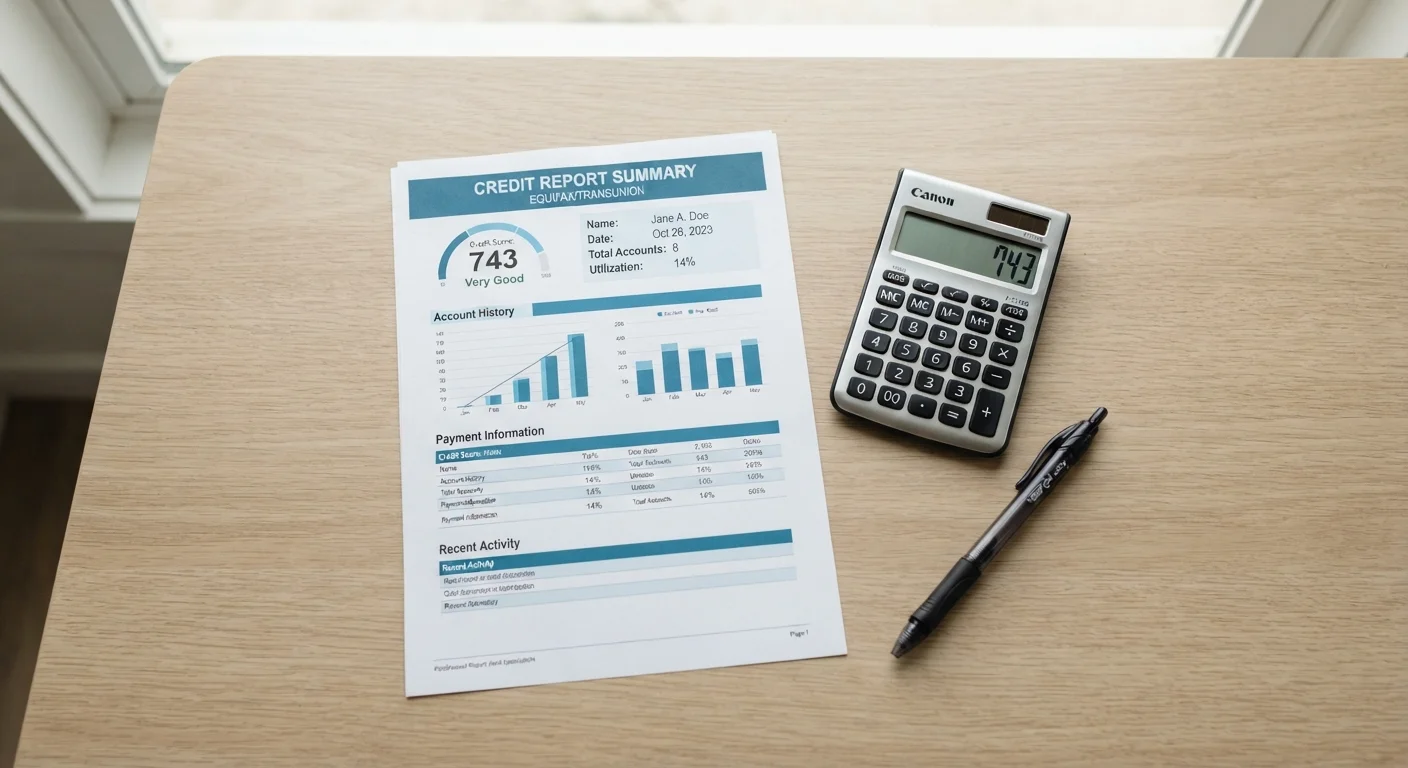
Utilisation is the share of your available revolving credit — mainly credit cards — that you're actually using. If your combined credit limit is $10,000 and your current balances total $3,000, your utilisation rate is 30%. Most financial guidance suggests keeping this figure below 30%, though lower is generally better. Paying down balances or asking for a credit limit increase (without spending more) can improve this ratio relatively quickly.
Credit utilisation rate
The percentage of your total available revolving credit that you are currently using. It is calculated by dividing your total balances by your total credit limits and is a major factor in most credit scoring models.
Hard inquiry
A review of your credit report triggered when you apply for new credit, such as a credit card or loan. Hard inquiries can temporarily lower your score by a small amount and remain on your report for two years.
Revolving credit
A type of credit account, like a credit card or line of credit, where you can borrow up to a set limit, repay it, and borrow again. Your balance and available credit fluctuate month to month.
Installment loan
A loan repaid in fixed, regular payments over a set period — such as a mortgage, auto loan, or student loan. Unlike revolving credit, the credit limit does not reset after repayment.
Credit mix
The variety of credit account types on your report — for example, credit cards combined with installment loans. A diverse mix can positively influence your credit score, though it is a relatively minor factor.
3. Length of Credit History (approx. 15%)
Scoring models look at how long your oldest account has been open, how long your newest account has been open, and the average age across all accounts. Older is better here. This is why closing an old credit card — even one you barely use — can sometimes hurt your score by shortening your average account age. If you're just starting out, our ground-up guide to building credit covers how to establish history responsibly.
4. Credit Mix (approx. 10%)
Having experience with different types of credit — revolving accounts like credit cards and installment loans like auto or student loans — can help your score modestly. You don't need to take on debt just to diversify your mix, but it's useful to understand why a single credit card and nothing else might not produce the highest possible score.
5. New Credit Inquiries (approx. 10%)
Each time you apply for new credit, the lender typically pulls a hard inquiry on your report. One inquiry has a minor, short-lived effect on your score. But several applications in a short window outside of rate-shopping periods can add up and signal financial stress to lenders. Rate-shopping for mortgages or auto loans is generally treated as a single inquiry if done within a focused time frame — usually 14 to 45 days depending on the scoring model.
Because these factors show up on your credit report, it pays to review that report regularly. Our Annual Credit Report Checklist walks you through exactly what to look for each year. And once you understand the factors, building on them consistently is the real path forward — see Habits That Support a Healthy Credit Profile Over Time for practical long-term strategies.
This article is for general informational purposes only and does not constitute personalised financial or credit advice. Consult a qualified financial professional for guidance specific to your situation.