

Key Takeaways
Paying Yourself First
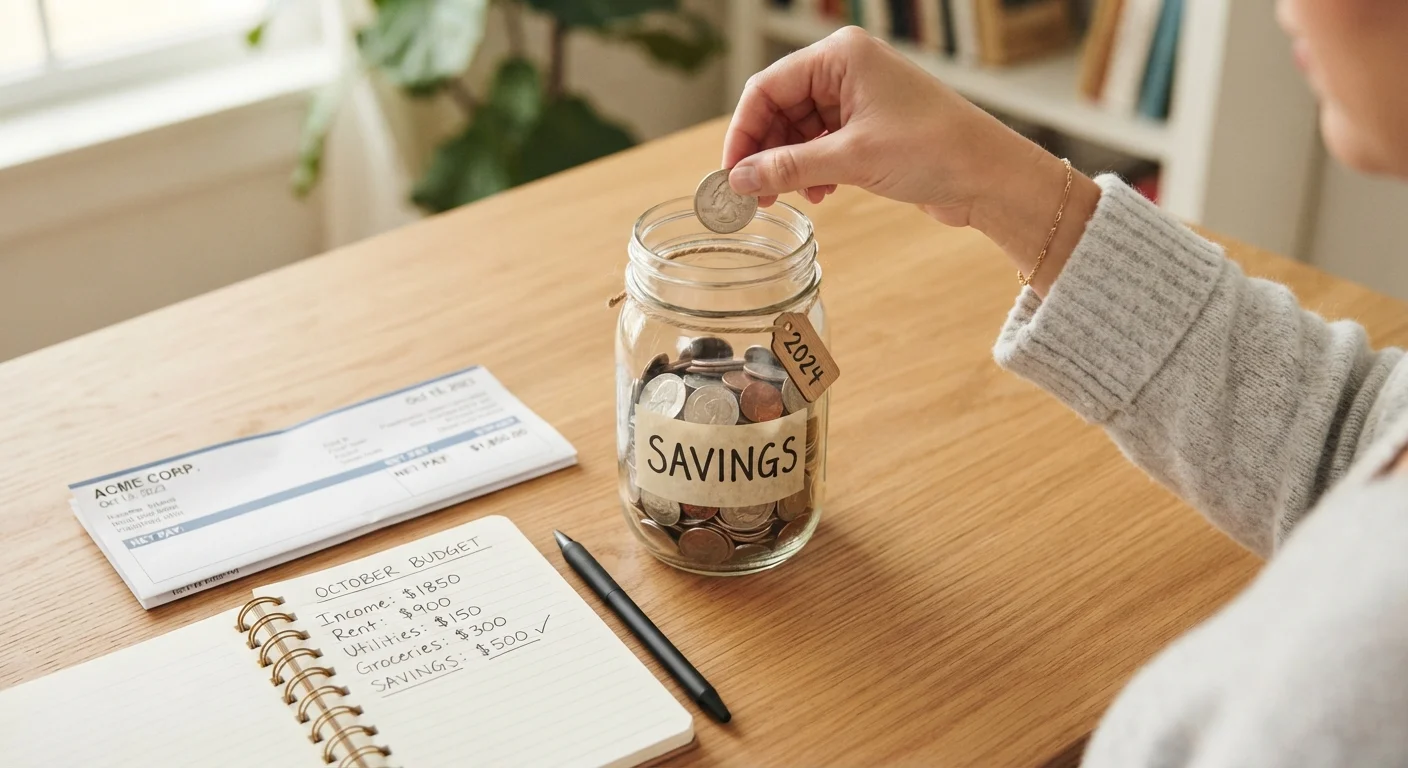
Paying yourself first means directing a portion of your income to savings before you pay any bills or spend on anything else. Instead of saving whatever is left over at the end of the month, you treat your savings contribution like your most important bill — one that gets paid the moment money comes in. This approach flips the traditional spending order and makes saving automatic rather than optional.
In personal finance, this strategy is often described as a "reverse budget" because it prioritizes savings at the front end of the cash-flow cycle rather than the back end.
The Core Idea in Plain Language
Most people save backward. They pay rent, utilities, groceries, subscriptions, and everything else — and then save whatever is left. The problem: there is rarely anything left.
Paying yourself first reverses that sequence. When a paycheck arrives, your savings contribution moves out immediately — before you pay a single bill or make a single purchase. What remains is what you spend. This isn't a trick; it's a deliberate prioritization of future financial security over present-day convenience.
The CFPB and most personal finance educators describe this as one of the most reliable ways to build savings steadily over time, precisely because it removes willpower from the equation. You never see the money sitting in your checking account, so you are far less likely to spend it.
For a fuller look at how this fits into the broader practice of budgeting, see a ground-up budget walkthrough for beginners.
How to Actually Do It
The mechanics are straightforward. Most banks and credit unions allow you to set up automatic recurring transfers between accounts. The goal is to schedule a transfer from your checking account to a savings account — or directly into a retirement account — on the same day you get paid, or the day after.
Here is a simple starting process:
- Decide on an amount. Review your essential monthly expenses and figure out how much you can realistically set aside. If you're unsure, start small and adjust upward over time.
- Open a separate savings account. Keeping savings in a different account — ideally one that's slightly harder to access — reduces the temptation to dip into it.
- Automate the transfer. Log into your bank and schedule a recurring transfer for your payday. Once this is set, saving happens without any ongoing decision-making on your part.
- Treat it as non-negotiable. Approach your savings transfer the same way you treat your rent — it's due, and it's not optional.
Make the Transfer Invisible
The easiest way to stick with paying yourself first is to set it up so you never manually move the money. Schedule the automatic transfer for your payday so it happens before you even check your balance. Out of sight, out of mind — and in your savings account.
If your employer offers direct deposit, many payroll systems let you split your paycheck across multiple accounts automatically. This means your savings portion never touches your spending account at all.
Once you have an emergency fund established, you might also direct a portion of this automatic saving toward retirement. See how to build your first emergency fund from zero for a step-by-step approach to that first milestone.
Common Variations and Considerations
Not every financial situation is identical, and paying yourself first looks a little different depending on your income, debts, and goals.
57%
Americans unable to cover a $1,000 emergency
According to a Bankrate survey, more than half of U.S. adults said they could not pay for a $1,000 unexpected expense from savings alone.
$0
Typical month-end savings when spending comes first
Personal finance research consistently shows that people who save whatever is 'left over' after spending tend to save little or nothing most months.
10–20%
Commonly recommended savings rate
Many financial educators and the CFPB cite saving 10–20% of take-home pay as a reasonable long-term savings target for most households, though any amount is a valid starting point.
Fixed amount vs. percentage: Some people save a flat dollar figure each month; others prefer to save a consistent share of each paycheck. Both approaches work. A percentage tends to scale naturally as income grows, while a flat amount is easier to calculate. Saving a fixed amount versus saving a percentage of income explores when each approach makes the most sense.
Carrying debt: If you have high-interest debt, it may feel counterproductive to save while that debt accrues interest. Many financial educators suggest maintaining at least a small emergency fund even while paying down debt — otherwise, an unexpected expense can push you back into borrowing. The specific balance depends on your interest rates and income stability.
Variable income: If your income fluctuates from month to month, consider saving a percentage rather than a fixed dollar amount, or setting aside savings during higher-earning months to compensate for leaner ones.
This article is for general informational purposes only and is not personalized financial advice. For guidance specific to your situation, consult a qualified financial adviser or other licensed professional.