

Key Takeaways
Why Finding the Right Mechanic Matters
For most drivers, a car is both a major financial asset and a daily necessity. Yet many people hand it over to a stranger with little idea whether they're dealing with someone skilled and honest — or not. A reliable mechanic is genuinely one of the most useful relationships you can build as a car owner. Get it right and you'll save money, avoid nasty surprises, and drive with more confidence. Get it wrong, and the consequences can range from wasted money to genuine safety risks.
The good news is that vetting a mechanic isn't complicated. It just requires knowing what to look for and being willing to ask a few direct questions before you commit. For broader context on keeping your vehicle in good shape, see our car maintenance hub for essential upkeep guidance.
What you will need
How to Evaluate a Shop Before Handing Over Your Keys
Start by looking at the basics. A shop that's reasonably tidy, organized, and busy is usually a good sign — it suggests consistent business and some degree of professional pride. Look for ASE certification displayed in the waiting area. ASE is an independent nonprofit organization that tests and certifies automotive technicians; it's a widely recognized baseline for competence, though it's not the only indicator of quality.
Ask whether the shop specializes in your type of vehicle. Some shops focus on particular makes or vehicle categories, and that specialization can mean more relevant experience. Also check whether they're affiliated with any recognized trade associations, and look at online reviews with a critical eye — don't be swayed by a handful of five-star reviews, but patterns across many reviews over time can be informative.
Try a Small Job First
If you're evaluating a new shop, bring your car in for a straightforward, low-stakes service like an oil change or tire rotation before committing to anything more significant. This gives you a low-risk opportunity to assess how the shop communicates, what they charge, and whether they try to upsell services that don't seem necessary.
It's also worth noting how the front desk communicates. Are staff clear, patient, and willing to explain things? Or do they rush you and talk over your head? Communication style is often a reliable indicator of how a shop treats customers throughout the process. This parallels the kind of vetting you'd do when hiring any tradesperson for skilled work.
Questions to Ask Before Any Work Begins
Before authorizing any repair, ask these questions directly:
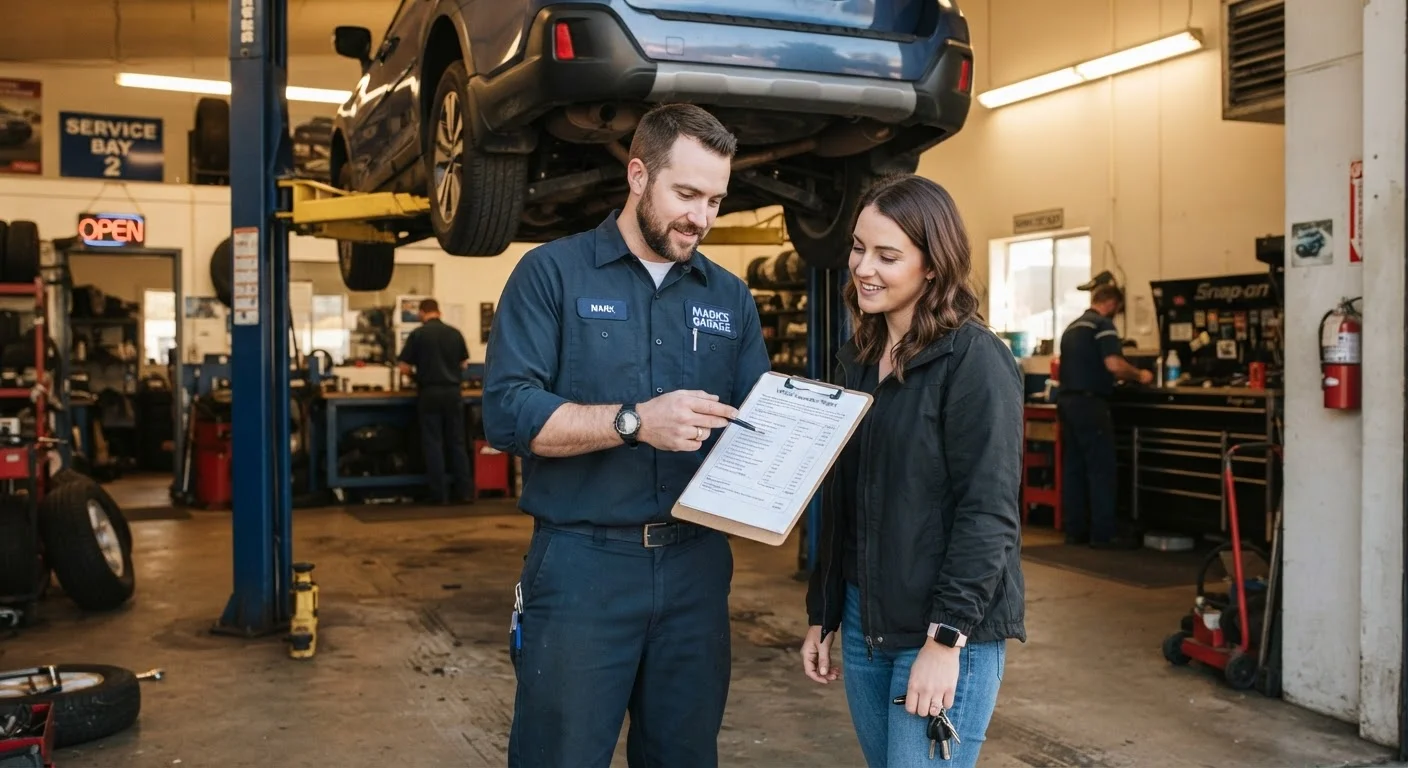
Ask for a written estimate before approving work
Request a written estimate that itemizes both parts and labor costs. In many US states, repair shops are legally required to provide one if you ask. A written estimate gives you a baseline to compare against and protects you from charges you didn't agree to.
Confirm what parts will be used
Ask whether the shop will use OEM (original equipment manufacturer) parts, aftermarket parts, or remanufactured parts — and what the difference in cost and warranty coverage is. There's no single right answer, but you deserve to know what's going into your car.
Ask about the warranty on parts and labor
A reputable shop will stand behind its work. Ask specifically: how long is the warranty on the repair, and does it cover both parts and labor? Common warranties range from 90 days to 12 months or 12,000 miles, though this varies by shop and job type.
Describe the problem in plain language
Don't try to diagnose the issue yourself — just describe what you notice: sounds, smells, when it happens, and how long it's been occurring. A skilled technician uses your description as a starting point. If a shop dismisses your description without investigation, that's a red flag.
Get a second opinion on major repairs
If a shop recommends a repair that will cost several hundred dollars or more, it's reasonable to get a second estimate from another qualified shop. A trustworthy mechanic will not pressure you to decide immediately, and won't take offense at the suggestion.
Once work is complete, a trustworthy mechanic should be able to show you the old parts (where applicable), walk you through what was done, and explain why it was necessary. If you're not offered that transparency, ask for it. Understanding what your car actually needs is also easier when you stay informed between services — our guide on keeping your car in good shape between services covers the habits that reduce repair surprises.
Never Approve Work Without a Written Estimate
Verbal estimates are too easy to misremember or dispute. Always get the scope of work and pricing in writing before any repair begins. If a shop refuses to provide this, take your vehicle elsewhere. For significant repairs, comparing two written estimates is a straightforward way to protect yourself financially.
Building a Long-Term Relationship
Finding a mechanic you trust is worth treating as a long-term investment. Once you've found someone reliable, stick with them. A shop that knows your vehicle's history can catch developing issues earlier and give you more accurate advice. Ask whether they keep service records on file — many shops do, and it simplifies every future visit.
Word-of-mouth is still one of the most dependable ways to find a good mechanic. Ask neighbors, colleagues, or local community groups for personal recommendations. Someone who has used the same shop for years and had consistently good experiences is a far stronger signal than any marketing. If you're new to car ownership entirely, first-time car owners share other lessons worth knowing sooner — including why a trusted mechanic tops the list.