

Key Takeaways
Why the Warm-Up Habit Is Hard to Shake
Ask almost any driver who grew up before the 1990s and they'll tell you the same thing: always let your car warm up before driving in winter. It feels responsible, protective even — like you're giving the engine a chance to wake up gently before asking anything of it.
The habit made sense once. Older carbureted engines genuinely needed time to stabilize their fuel-air mixture in the cold. But the automotive world changed, and driving habits largely didn't follow. The vast majority of cars on US roads today use fuel injection and are managed by an onboard computer — a fundamentally different system that behaves very differently in the cold.
Sorting myth from fact here isn't just about being technically correct. Following outdated warm-up advice can waste fuel, increase emissions, and — counterintuitively — add wear to your engine over time. See our breakdown of common car myths that cost drivers money for more examples of well-meaning habits that backfire.
Myth
You need to idle your car for at least 5–10 minutes in cold weather to protect the engine.
Fact
On modern fuel-injected vehicles, 30–60 seconds is enough time for oil to circulate before driving gently.
This advice was sound for carbureted engines, which needed time to stabilize fuel delivery in cold air. Fuel injection, now standard across virtually all new cars, is managed electronically and adjusts the fuel-air mixture instantly at any temperature. The engine doesn't need an extended idle — it needs gentle, low-load driving to bring all its components up to operating temperature efficiently. Prolonged idling keeps the engine at a lower temperature than light driving would, meaning it spends more time in a partially warmed state.
Myth
Idling in the cold doesn't hurt anything — it just uses a little gas.
Fact
Extended cold idling can wash oil off cylinder walls, increasing wear and diluting the engine oil with unburned fuel.
When a cold engine idles for a long time, it runs a richer fuel mixture — more fuel relative to air — to maintain smooth operation. That excess fuel can seep past the piston rings and mix into the engine oil, thinning it and reducing its lubricating ability. Cylinder walls are also more vulnerable to wear when the engine isn't generating enough heat to fully vaporize the fuel. Driving gently produces more internal heat, more quickly, and avoids this prolonged rich-running condition.
Myth
Synthetic oil makes no difference to cold-weather starts — oil is oil.
Fact
Synthetic oil flows significantly faster than conventional oil at low temperatures, reaching critical engine components sooner after a cold start.
Conventional motor oil thickens noticeably in the cold, slowing its flow through narrow oil passages in the first moments after startup — the period when most cold-start wear occurs. Synthetic oil is engineered to remain more fluid at low temperatures, circulating faster and reaching bearings, camshafts, and other surfaces more quickly. If you regularly drive in cold climates, checking whether your vehicle's manufacturer recommends synthetic oil — or a lower-viscosity winter grade — is a practical step. Consult your owner's manual for the specification that applies to your engine.
Myth
You should rev the engine a few times right after starting it in the cold to warm it up faster.
Fact
Revving a cold engine places high load on components before oil has fully circulated and clearances have normalized — this is harder on the engine, not easier.
Engine parts are machined to very tight tolerances that assume a specific operating temperature. When the engine is cold, metal clearances are slightly off from their design specs, and oil pressure is still building. High revs in this window force parts to work hard under conditions they weren't optimized for. The right approach is the opposite of revving: start the engine, let it idle briefly, then drive with low throttle input until the temperature gauge shows the engine is warming up.
Myth
If it's cold enough, you can skip your warm-up and just drive — the engine will be fine immediately.
Fact
A brief 30–60 second idle before driving is still worthwhile in very cold conditions to allow initial oil circulation before load is applied.
Modern engines don't need a long idle, but the first few seconds after a cold start are the most vulnerable for wear. Oil drains back into the sump when a car sits, and the oil pump needs a moment to push lubricant through the system. A short pause before pulling away — not ten minutes, just under a minute — gives the oil pressure time to build. After that, gentle low-speed driving does the rest. This is the approach most manufacturer guidelines and engineering organizations recommend.
What You Should Actually Do in Cold Weather
The practical guidance from most automotive engineers and manufacturer owner's manuals is straightforward: start the car, wait about 30–60 seconds for oil to circulate, then drive away — but gently. Keep engine revs low and avoid heavy acceleration for the first few minutes. That light driving load warms the engine, transmission, and other drivetrain components far more effectively than stationary idling.
~1 PSI
Tire pressure lost per 10°F temperature drop
The US Department of Transportation notes that tire pressure decreases approximately 1 PSI for every 10-degree Fahrenheit drop in ambient temperature.
30–60 sec
Recommended idle time before driving in cold weather
Most automaker owner's manuals and automotive engineering guidance suggest a brief idle of under one minute is sufficient before gentle driving in cold conditions.
Your car's temperature gauge is a reliable guide. Until it moves off the cold peg, treat the engine kindly — no hard acceleration, no high-revving. Once it reaches normal operating temperature, the engine is ready for full demands.
Cold-weather readiness involves more than the warm-up routine. Battery condition, tire pressure (which drops about 1 PSI for every 10°F decrease in temperature), coolant concentration, and wiper blade condition all matter. A full seasonal review before temperatures drop is worthwhile — our seasonal car maintenance checklist covers these in detail.
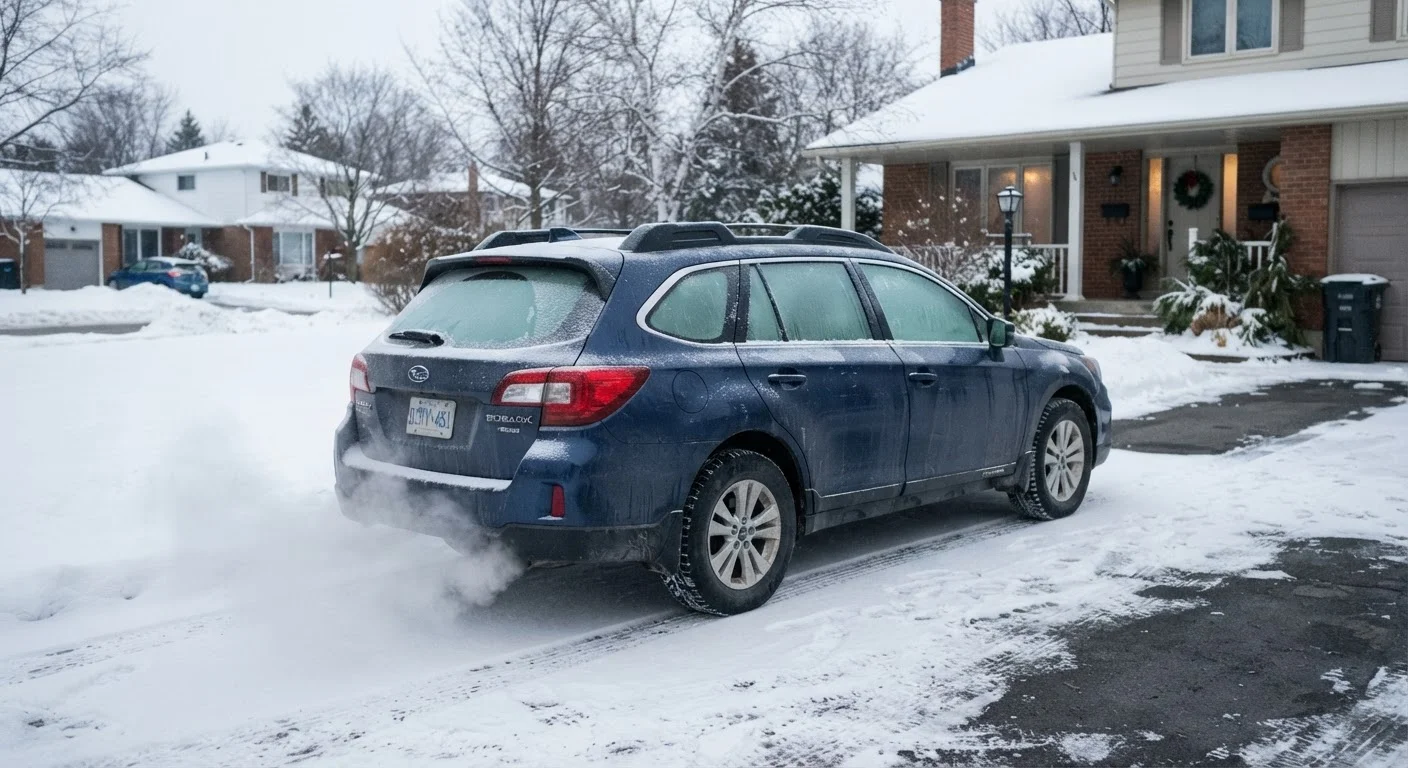
One legitimate cold-weather concern is your cabin defrost. Running the engine briefly before driving to clear a frosted windshield is a practical safety step — just recognize you're doing it for visibility, not engine health. And if you do let it idle a few minutes for comfort, that's fine. Just don't extend it to ten or fifteen minutes under the belief that your engine requires it.
For broader habits that keep engines healthy year-round, the small routines that keep cars reliable between services are worth building into your regular schedule.