

Key Takeaways
Why Brake Wear Deserves Regular Attention
Brakes are the single most important active safety system on your vehicle. Unlike a rattling exhaust or a minor oil seep, worn brake components can reduce your ability to stop in an emergency — sometimes with very little prior warning. Knowing what to look and listen for means you can act while the problem is still straightforward to fix.
Brake pads are the consumable friction material that clamps against the rotor — the large metal disc sitting behind each wheel — every time you press the pedal. That friction generates significant heat and gradually wears both surfaces down. Wear rate depends on driving style, vehicle weight, stop-and-go traffic, and how the brakes were originally specified. All of these factors vary, which is why mileage alone is a poor guide; condition-based checking matters more.
Tyre condition is closely connected to braking performance — worn or underinflated tyres extend stopping distances regardless of brake condition. If you're reviewing your brakes, it's sensible to check tyres at the same time. Our guide to tyre condition and road safety explains what tyre wear patterns are telling you.
Combine Brake Checks With Seasonal Maintenance
A quick brake check costs nothing and takes minutes. Folding it into a seasonal routine — alongside fluids, tyres, and lighting — means fewer surprises. Our seasonal car maintenance guide has a full checklist to work from.
How to Check Your Brakes: Step-by-Step
The following checks are designed for a standard driveway or quiet parking lot. No specialist tools are required for most of them, and none of them demand mechanical experience — just attentiveness. Use the results to decide whether a professional inspection is overdue, not to diagnose or repair the brakes yourself.
What you will need
Flashlight or phone torch
Illuminates the brake rotor and pad through the wheel spokes for a visual inspection.
Floor jack and jack stands
Required if you want to remove a wheel for a closer inspection — only attempt on a flat, stable surface if you are confident doing so safely.
Listen for audible warning signs while driving
The simplest brake check happens from the driver's seat. With the windows down on a quiet stretch of road, apply the brakes steadily and listen for:
- High-pitched squealing when braking: Most pads contain a metal wear indicator tab that contacts the rotor when friction material gets thin, producing this deliberate noise. It's a built-in alert, not random.
- Grinding or metal scraping: This typically means the pad material has worn away completely, leaving the metal backing plate against the rotor. This is urgent — continued driving accelerates rotor damage.
- Squealing that clears after the first few stops following an overnight park: Usually surface rust burning off the rotors in damp or cold conditions — generally harmless. If the noise persists after several normal stops, treat it seriously.
Pay attention to how the brake pedal feels
Pedal behaviour is a direct indicator of brake system health. Take note of:
- Pulsing or vibrating pedal under braking: Often caused by warped rotors — discs that have developed uneven thickness from heat stress. The caliper grabs unevenly as the rotor turns, transmitting that rhythm through the pedal.
- Soft or spongy pedal: More likely a hydraulic issue (air in the brake lines or a fluid leak) than direct pad or rotor wear, but equally serious and requiring prompt professional attention.
- Car pulling to one side when braking: Can indicate uneven pad wear or a stuck caliper. Not something to self-diagnose — book an inspection.
Do a visual check through the wheel spokes
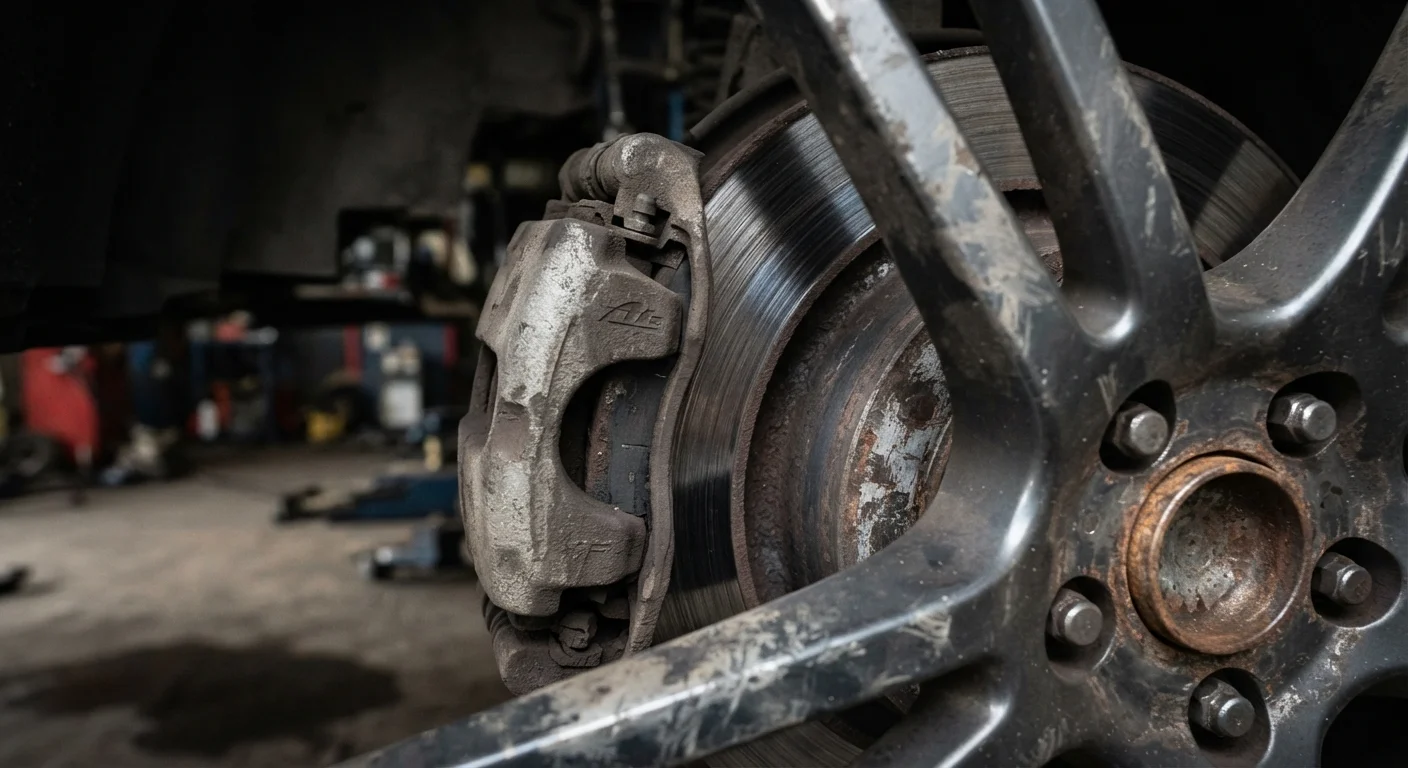
With the vehicle parked and engine off, crouch beside each wheel and shine a flashlight through the spokes toward the brake assembly. Look for:
- On the rotor: Deep grooves or scoring across the disc face, a raised lip around the outer edge (indicating the centre has worn down), heavy rust that hasn't smoothed off with normal use, or visible cracks.
- On the pad: The friction material pressed against the rotor by the caliper. You should be able to see several millimetres of pad material remaining. If the pad looks wafer-thin or flush with the metal backing, schedule an inspection.
You don't need to remove the wheel for this check — many standard alloy wheel designs provide a workable view without it.
Check your dashboard brake warning light
Many modern vehicles have a pad wear sensor wired to a dashboard warning light — typically labelled BRAKE or shown as an exclamation mark inside a circle with brackets. When pads wear to minimum thickness, the sensor triggers the light.
Do not wait for the light before acting on sounds or pedal changes — the warning system is a backup, not the primary alert. And if the light appears on its own, note that it can also indicate low brake fluid, so the underlying cause always needs professional diagnosis. Resetting or ignoring the light without understanding why it's on is not a safe option.
Arrange a professional inspection if any sign is present
The checks above are designed to help you recognise when to call a mechanic — they don't replace a hands-on professional evaluation. If any step raises a concern, book an inspection. A qualified mechanic can:
- Measure pad thickness precisely against manufacturer minimums
- Measure rotor thickness and check for warping
- Inspect calipers, brake lines, and fluid condition
- Advise whether pads alone need replacing, or whether rotors also require attention
Catching wear early is generally less expensive than allowing metal-on-metal contact to damage rotors — and far safer than discovering a problem in an emergency stop situation. For a broader picture of what to monitor between scheduled services, see our guide on keeping your car in good shape between services.
Never Delay Suspected Brake Problems
If you hear grinding, feel the car pulling to one side when braking, or notice a significant increase in stopping distance, stop driving the vehicle and arrange a professional inspection immediately. Degraded brakes represent a direct safety risk to you and other road users. This article is for general educational purposes only — always have a qualified mechanic diagnose and repair brake concerns.
Frequently Asked Questions About Brake Wear
How often should brakes be inspected?
Most mechanics recommend at least a visual brake inspection at every tyre rotation — roughly every 5,000 to 7,500 miles for many drivers — or at each oil change if the shop includes a complimentary inspection. Your owner's manual will carry vehicle-specific guidance. As a minimum, aim for a check at least once a year, and more frequently if you do a lot of city or stop-and-go driving.
Do front and rear brakes wear at the same rate?
No. Front brakes handle a larger share of the stopping force on most passenger vehicles due to weight shifting forward during braking, so front pads typically wear faster. Always inspect all four corners — rear brake condition matters too, particularly on vehicles with rear-wheel drive or higher rear brake bias.
Is it safe to drive with the brake warning light illuminated?
Not recommended. Drive only as far as necessary to reach a mechanic safely, avoid high-speed or highway driving, and do not delay the inspection. The light can indicate either worn pads or a hydraulic problem — both require prompt attention.
This article is for general informational purposes only and does not constitute professional mechanical advice. Always consult a qualified mechanic for diagnosis and repair of your vehicle's brake system.